Showing posts with label science. Show all posts

Friday, 17 November 2017

A Tale of Two Recipes

I usually avoid so-called wellness bloggers; but I must admit, the stereotype of joyless vegans obsessed with kale is not entirely accurate. Some of them make stews with venison and red wine. And kale. And a shocking degree of racism.

By way of background, my local butcher had venison in stock, so I picked some up to make into a stew and started Googling around for recipe ideas.

Something called "smoky venison stew" sounded good, so I clicked the link, and was confronted with 500 words of text before the actual recipe.

It starts off in a mildly amusing way. Chantelle, the author, explains how she dreams of hunting her own food, and never has because she is too squeamish; but expresses her gratitude for the animal giving its life to feed her. Okay, fine. I actually agree, we should treat our food animals with respect.

A magnificent and delicious creature.
Image source: Jeff Blincow / Wildlife Observer


Then the post takes a screeching left turn into crazytown, as Chantelle starts rambling about power and energy, bison, seals and the traditional Inuit diet:

Wild meat is so full of power and energy, there is nothing closer to organic, or free range. It’s hard to imagine what it must have been like when there were bison everywhere and the people had no shortage of wild food. Nowadays it’s more difficult to attain, I have heard that even the native Inuit cannot hunt their natural food. Environmentalists have banned them from hunting seals (a main food source) and there is only a certain section of the land where they are allowed.

What? Seals? I thought this was a recipe for deer. The village butcher doesn't stock seal.

Friday, 13 October 2017

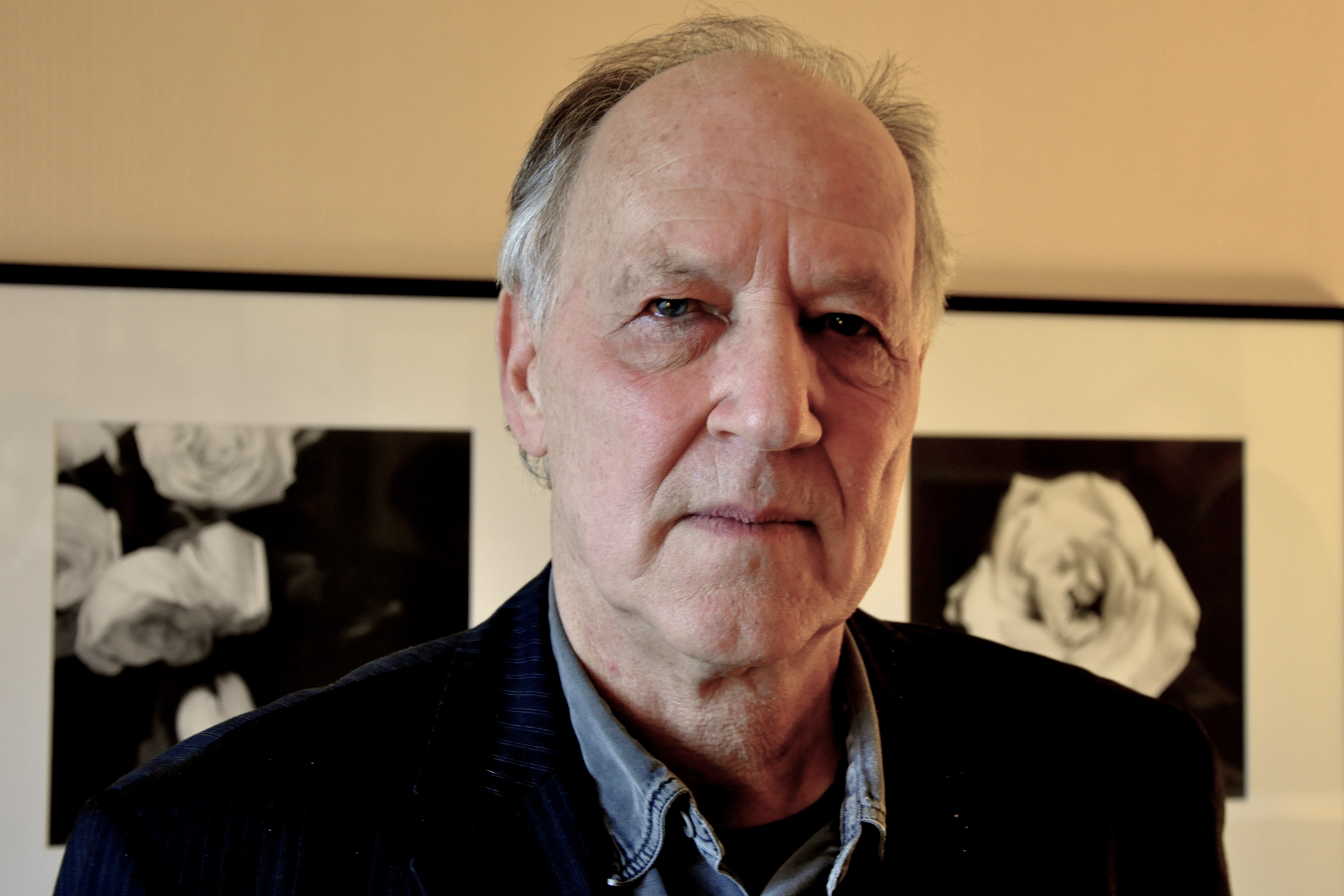
Herzog and Hope

The film director Werner Herzog explained his philosophy of life last week, on Mark Kermode's film review podcast. It resonated with me, and I believe it's worth transcribing in full.

(The relevant part of the podcast is here, starting at 1:56.)
Werner Herzog.
Source: Wikimedia Commons

Thursday, 10 August 2017

Should we be afraid of artificial intelligence?

I've got a guest post on Digital Link, inspired by reports of Facebook chatbots creating their own language. As holder of a PhD in artificial intelligence applied to natural language processing, I have some thoughts. Thanks to the good people at Digital Link for publishing them.

Spoiler: The machines are probably not going to rise up and destroy us.


Friday, 20 January 2017

President Zuckerberg

A Vanity Fair piece by Nick Bilton asks, Will Mark Zuckerberg Be Our Next President?

According to Betteridge's Law of Headlines, the answer is no. But in his opening sentence Bilton insists this is a serious question, so let's play along. (The same question has been picked up by The Atlantic.)

Mark Zuckerberg.
Photo credit: By PresidĂȘncia do MĂ©xico - Flickr, CC BY 2.0, Link

Friday, 28 August 2015

Magic Sugar Pills

Jeremy Corbyn, frontrunner to become the next leader of the Labour party, claims to believe in the efficacy of magic sugar pills. This not only makes him a bad leader, it makes him a bad socialist.

It has emerged that Corbyn signed a House of Commons motion in 2010 approving the provision of homeopathy on the NHS, and later confirmed his support for it on Twitter.

Other MPs on the list include Tim Farron, now leader of the Liberal Democrats. (I have already expressed serious doubts about Farron's moral fibre.) The Secretary of State for Health, Jeremy Hunt, has also stated his support for homeopathy. In their disregard for science they join the SNP, with its recent ban on all genetically modified crops in Scotland. With the possible exception of Plaid Cymru, not a single party in Parliament is unequivocally in favour of science. This is alarming and depressing in equal measure.

Medicine: More effective when it contains something other than sugar.

The scientific evidence is very clear: Homeopathy achieves nothing more than the placebo effect. It consists of "medicines" diluted so far that no trace of the supposed active ingredient can remain. It is an industry which sells these products to sick and vulnerable people, some of whom have died after substituting homeopathy for conventional medical care. It consumes resources which could instead be spent on real medicine.

A Prime Minister must decide on matters of life and death. With his support for homeopathy, Corbyn demonstrates a shameful lack of critical thinking, unfit for one who aspires to high office. He might as well believe the UK's energy grid can be replaced by a perpetual motion machine which runs on happy thoughts.

Wednesday, 12 August 2015

Acts of Cowardice: SNP and GMOs

Last week, the SNP government in Edinburgh announced it would ban genetically modified crops in Scotland. The European Union already has strict rules for safety of genetically modified organisms; the SNP is seeking to opt out from these rules and ban GMOs altogether. The government's reasoning was expressed by Agriculture Secretary Richard Lochhead:
[Lochhead] said that Scotland was known around the world for its "beautiful natural environment" and banning the growing of genetically modified crops would protect and further enhance its "clean, green status". 
Mr Lochhead added: "There is no evidence of significant demand for GM products by Scottish consumers and I am concerned that allowing GM crops to be grown in Scotland would damage our clean and green brand, thereby gambling with the future of our £14bn food and drink sector. 
"Scottish food and drink is valued at home and abroad for its natural, high quality which often attracts a premium price, and I have heard directly from food and drink producers in other countries that are ditching GM because of a consumer backlash."

This is a remarkable act of cowardice. Lochhead isn't even attempting to engage with the science behind GM crops. He is not saying he has any concerns about safety. If he did, at least there would be scope for rational debate about risks and benefits.

"Reality is that which, when you stop believing in it, doesn't go away." – Philip K. Dick

What exactly are the risks of growing GM crops? The scientific consensus is that they are minimal, and well covered by existing regulation.

Conversely, the anti-GM lobby is not very specific. Instead of evaluating each proposed intervention on its own merits, the likes of Greenpeace declare that all types of genetic modification are universally bad, and endanger our precious bodily fluids harmony with nature. Some anti-GM campaigners may be more responsible and nuanced, but Lochhead is not concerned with them. He is afraid of people who will shun Scotland and its produce, if so much as a single field is planted with GM crops.

The beautiful but artificial landscape of the Scottish Highlands. It was once covered
by primordial forest, but long ago cleared by humans for grazing sheep.

Wednesday, 24 June 2015

The Downfall of Sir Tim Hunt

A couple of weeks ago, the Nobel Prize-winning scientist Sir Tim Hunt made some highly sexist remarks in a speech to the World Conference of Science Journalists. Soon after, he resigned his post as an honorary professor at University College London.

Sir Tim Hunt. Source: BBC News
Hunt is reported to have said:

Let me tell you about my trouble with girls. Three things happen when they are in the lab: you fall in love with them, they fall in love with you, and when you criticise them they cry.

There are two aspects of this I find interesting: The depth of Hunt's cluelessness, and the question of whether he should have kept his job.

Thursday, 12 February 2015

Mathematics of Love

Valentine's Day is this Saturday. Apropos of this, I recently ran across an article by the science writer Hannah Fry; she discusses the mathematician Peter Backus, who estimated his chances of finding a girlfriend at 1 in 285,000.

There's a lot of maths needed to get these arrows on target.
Source: ClipArtLord

Wednesday, 7 January 2015

Theology, Market Share and Charlie Hebdo

Today, the offices of the French satirical magazine Charlie Hebdo were attacked by masked gunmen, apparently Islamist radicals. The attackers have murdered at least twelve people. My thoughts and best wishes are with the families, friends, and colleagues of the victims. This was a shameful, cowardly crime, and I hope the perpetrators are swiftly hunted down and brought to justice.

This was not only an attack on one magazine, but an attack on us all, on our freedom of speech and opinion. I value my freedom of expression on this blog and elsewhere, and I stand in solidarity with the staff of Charlie Hebdo.


I have been wondering about the mindset which drives a person to commit this sort of crime. It appears likely the attackers consider themselves to be devout Muslims.

Wednesday, 10 December 2014

Pinups and teaching to code

I did an online programming course recently; in one assignment, the students could choose their own graphics, and someone thought it was a good idea to use "pinup" images of scantily clad women. This has obvious parallels to the incident known as Shirtgate.

It is another indication that Shirtgate wasn't an isolated incident, but part of a general background of sexism in science and computing. The course included peer assessment; one of the other students flagged the photos as offensive, notified the course organisers, and started a discussion in the student forums.

I'm intentionally being vague about the course and its website, so the participants can stay anonymous. I'd been meaning to blog about this for some time, but Shirtgate makes it more topical. (Example pinup graphic is below the fold.)

Monday, 24 November 2014

A Shirtgate challenge to Boris Johnson

I am beginning to think NASA had the right idea, when they expected Mission Control engineers to dress like this:

Ed Harris in Apollo 13, wearing an uncontroversial shirt.
Source: toutlecine

At least it would have spared us the idiocy known as Shirtgate.

Sunday, 16 November 2014

The Rosetta shirt incident

This week, the Rosetta mission landed a probe on a comet; but instead of a richly deserved celebration of their achievement, a lot of discussion centred on one man's shirt. This is not just a failing of one individual, but of the European Space Agency as a whole.

The man in question is Dr Matt Taylor, a senior scientist on the mission, and this is the shirt:

"Covered with half-naked women" would be a fair description.
Source: BBC News

Tuesday, 29 April 2014

Why should anyone believe scientists?


An old schoolmate recently asked an interesting question:

Most people don't really understand science. They are only repeating what they heard at school or in the media. So aren't they just taking science on faith, as if it were another religion?

Short answer: No.

Long answer: First of all, professional scientists don't understand most of science. How could it be otherwise? The totality of science is the work of thousands if not millions of people, over hundreds of years. It's far more than one human being could learn in a lifetime.

So the question isn't why the ordinary person in the street should believe what scientists say. Why should anyone believe them?

One good reason is that any given part of science is open to being observed and understood by a newcomer. Here is an example from my personal experience.

Thursday, 3 April 2014

The Android's Bicycle: A Problem of Uploading

Mind uploading is a common idea in modern science fiction.

The concept is simple enough. The human brain is a physical system, made up of cellular structures, chemicals and electrical activity. If we could scan a living brain at high enough resolution, a sufficiently complex computer could be used to simulate it. We could "run" human consciousness like a computer program. The simulated mind might have all the memories of the original.


Transparent human head with brain

The technical barriers are formidable. We have only a vague idea of how much resolution or processing power is "enough". Is it necessary to simulate the brain's physical structure, including complex feedback loops to the rest of the body; or can we use abstract representations of thought to achieve the same effect?

Imagine we did learn how to upload minds. This raises some tricky questions. Would the uploaded personality really be conscious? Would it be the same person as the one who had been scanned? If the original brain was destroyed, perhaps as part of the scanning process, is that person dead or still alive as an upload?

On a more practical level, how does the upload experience the universe? Could its perceptions be so different as to bring about radical changes in personality, so that it might not be the same individual after all?

Here is a little thought experiment which makes this last issue more concrete.